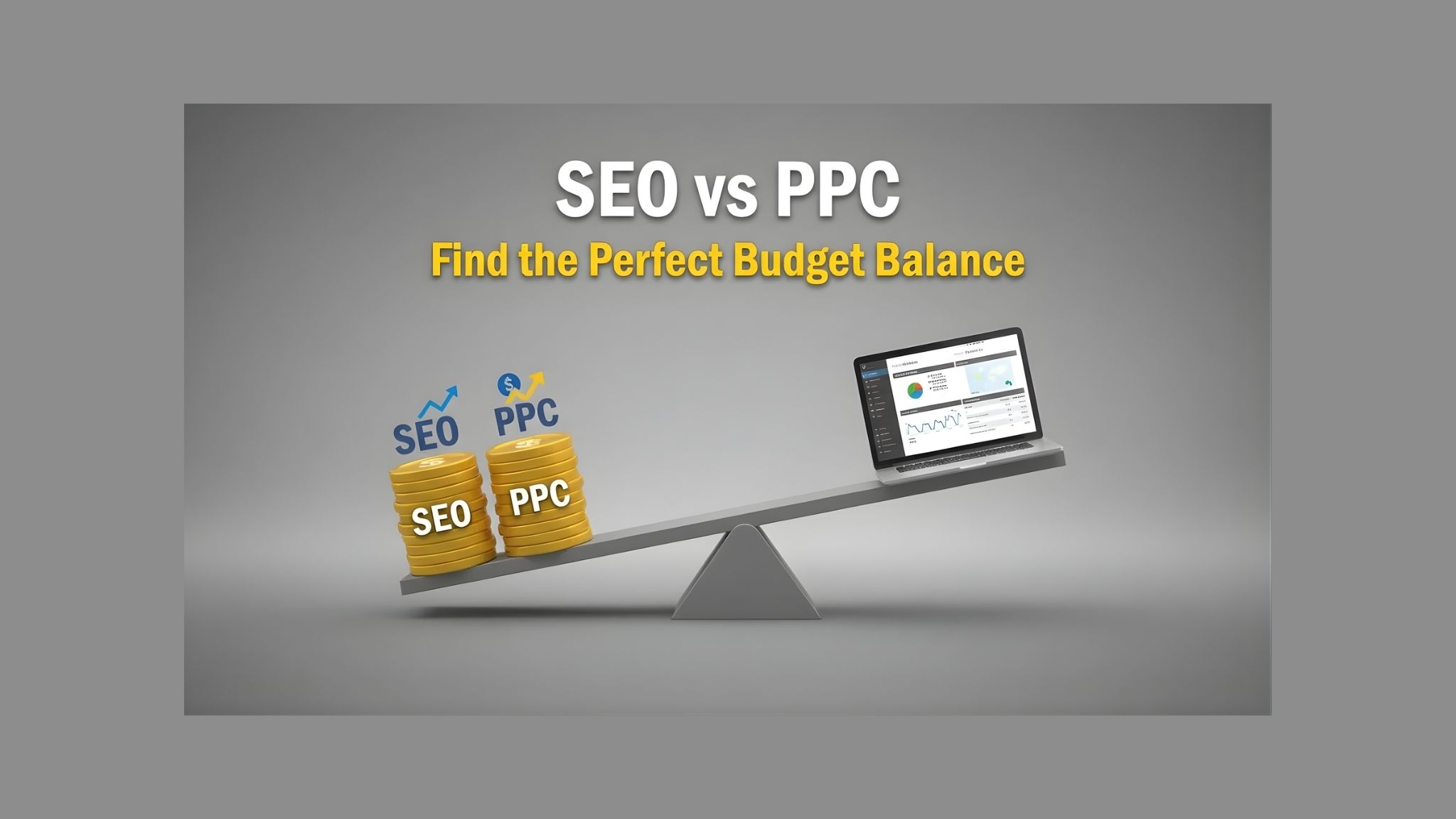
In today’s competitive digital space, marketing success is no longer about choosing between SEO or PPC. It’s about knowing how to balance both. Many businesses either spend heavily on ads and burn money quickly or rely only on SEO and struggle with slow results. The smartest brands avoid both extremes.
SEO and PPC serve different purposes. One builds long-term strength, while the other delivers instant visibility. When planned correctly, they support each other and create a powerful growth engine. This blog explains how to plan the right SEO–PPC budget mix in a simple, practical, and realistic way.
What Is an SEO Budget?
An SEO budget is the money you invest to improve your website’s organic visibility on search engines. Unlike paid ads, SEO focuses on earning traffic naturally over time.
This budget usually goes into improving website structure, creating useful content, optimizing pages for keywords, building authority through links, and monitoring performance regularly. SEO is not a one-time task—it’s an ongoing process that compounds results month after month.
The biggest advantage of SEO is that once your rankings stabilize, you continue to get traffic without paying for every click. However, patience is required because results don’t appear overnight.
What Is a PPC Budget?
A PPC budget is the amount you spend on paid advertisements to appear instantly on search engines and social platforms. Every click costs money, but in return, you get immediate traffic and visibility.
PPC budgets cover ad spend, keyword bidding, audience targeting, creatives, landing page testing, and campaign optimization. This channel is extremely useful when you need fast leads, quick sales, or visibility for a new product or service.
The limitation is simple—when the budget stops, traffic stops too. That’s why PPC works best when supported by a strong organic strategy.
Key Facts About SEO and PPC Campaign Budgets
Timeline vs. Longevity: SEO requires a significant upfront time investment (often 3–6 months) but generates compounding, long-lasting traffic that persists even if you pause active work.
Speed vs. Cost: PPC delivers instantaneous page-one visibility and traffic but remains a "pay-to-play" model where costs can scale indefinitely over the long term.
Psychology of Trust: Organic listings (SEO) typically earn higher user trust and click-through rates, as they are perceived as earned authority rather than paid placements.
Control and Precision: PPC offers granular control over daily spend, geographic targeting, and specific audience demographics, providing immediate, measurable data on every dollar spent.
Cost Dynamics: SEO expenses tend to stabilize or decrease relative to traffic growth over time, whereas PPC costs are dictated by market auctions and often rise as industry competition increases.
The Synergy Effect: Integrated campaigns yield the highest ROI; using PPC data to identify high-converting keywords allows for a more profitable and targeted SEO strategy.
Pros and Cons of SEO and PPC Budgets
SEO – Pros
Long-term traffic without paying per click
Builds brand trust and authority
Higher ROI over time
Stable results once rankings improve
SEO – Cons
Slow initial results
Requires patience and consistency
Algorithm updates can impact rankings
PPC – Pros
Instant traffic and leads
Full control over targeting
Easy to scale up or pause
Ideal for promotions and launches
PPC – Cons
Expensive for competitive keywords
Traffic stops when budget stops
Click costs increase over time
Poor landing pages waste money fast
Why Organic Traffic Is Getting Harder to Defend
Organic traffic today is more difficult to protect than ever before. Search results are crowded with ads, featured snippets, videos, AI answers, and shopping listings. Even ranking on the first page does not guarantee clicks anymore.
At the same time, Google has become stricter about content quality, experience, and trust. Generic or low-value content struggles to survive. This is why relying only on SEO can be risky, especially during algorithm updates.
PPC helps maintain visibility during these shifts, while SEO works silently in the background to strengthen authority.
Budget Planning Based on Realistic Outputs
Instead of deciding budgets emotionally, smart marketers plan based on expected outcomes. If your goal is immediate leads or sales, PPC should get a larger share initially. If your goal is long-term growth and reduced acquisition cost, SEO deserves consistent investment.
For most businesses, a balanced approach works best:
New businesses benefit more from PPC initially
Growing brands should balance both channels
Established brands can rely more on SEO while using PPC strategically
A Practical Starting Ratio:
New business: 60% PPC / 40% SEO
Growing business: 50% PPC / 50% SEO
Established brand: 40% PPC / 60% SEO
The budget mix should evolve as results improve, not remain fixed.
Choosing the Right Metrics for Each Channel
SEO and PPC must be measured differently. SEO performance should be judged by organic traffic quality, keyword improvements, engagement, and conversions—not just rankings. PPC should focus on cost per lead, conversion rate, and return on ad spend.
Using the same success metric for both channels leads to poor decisions. Each channel plays a different role in the customer journey. In short
SEO Metrics That Matter:
Organic traffic growth
Keyword rankings (quality > quantity)
Click-through rate (CTR)
Engagement & time on page
Conversions from organic traffic
PPC Metrics That Matter:
Cost per click (CPC)
Cost per lead (CPL)
Conversion rate
Quality Score
Return on ad spend (ROAS)
When to Adjust Your Budget Mix
Your SEO–PPC budget should not remain static. Adjustments are needed when ad costs rise, organic traffic stabilizes, competition changes, or business goals shift. Product launches, seasonal demand, and algorithm updates are also strong signals to rebalance budgets.
Gradual changes based on data always work better than sudden cuts or spikes.
Avoiding Common Budget Mistakes
Many businesses fail because they overspend on ads without building SEO or expect SEO to deliver instant results. Another common mistake is running PPC campaigns without optimized landing pages, which wastes money quickly.
Cutting SEO budgets once rankings improve is also risky. SEO needs maintenance to protect gains and defend against competitors.
Balancing Short-Term Wins with Long-Term Growth
PPC is excellent for short-term wins—it brings traffic the moment campaigns go live. SEO, on the other hand, builds a foundation that supports your business for years.
The best strategy is to let PPC drive quick results while SEO builds lasting strength. Over time, strong SEO reduces dependency on ads, improves brand trust, and lowers overall marketing costs.
In simple term, Think of PPC as:
A tap (turn on = traffic, turn off = stop)
Think of SEO as:
A well (slow to build, but long-lasting)
Conclusion
There is no universal formula for the perfect SEO and PPC budget. The right mix depends on your goals, industry, competition, and growth stage. What matters most is understanding that SEO and PPC are not rivals—they are partners.
When balanced correctly, they create faster growth, stronger visibility, and sustainable results. Focus on people-first strategies, track performance honestly, and adjust budgets with clarity—not fear.
FAQs – How To Get The Perfect Budget Mix For SEO And PPC Campaigns
1. Is SEO cheaper than PPC in the long run?
Yes, SEO becomes more cost-effective over time as organic traffic grows without per-click costs.
2. Can PPC work without SEO support?
Yes, but long-term dependency on PPC increases costs and risk.
3. How long does SEO take to show ROI?
SEO usually starts showing measurable results within 3 to 6 months.
4. When should I reduce PPC spending?
When organic traffic begins generating consistent leads or sales.
5. Does SEO help reduce PPC costs?
Yes, strong SEO improves brand trust and click-through rates, lowering ad costs.
Anuj Kumar Sharma
SEO Strategist & Digital Marketing Consultant
Anuj Kumar Sharma is an experienced SEO strategist and digital marketing consultant at Way2ITServices, specializing in search engine optimization, Google algorithm updates, AI content optimization, and growth-driven content strategies. With hands-on expertise in technical SEO, on-page optimization, and data-driven marketing, he helps businesses improve search rankings, generate quality leads, and build long-term online authority. His insights focus on practical SEO solutions aligned with the latest Google updates and industry best practices.